
The Middle East: Five Problems, All Interconnected
A six-part series on conflict, state fragility, resource pressure, and the structures that keep turning local crises into regional ones.

I have traveled through parts of the Middle East: Israel, the West Bank, Jordan, Lebanon, and Dubai. Travel does not make anyone an authority on a region this large or this old. It does make abstractions harder to hold. Borders stop being lines on a map and become roads and checkpoints. Water scarcity becomes a rooftop tank and a delivery schedule. Political fragmentation becomes uniforms, neighborhoods, and the hour the electricity goes off.
This series makes one argument: The Middle East is not a set of separate conflicts. It is one connected system, and its crises keep reproducing each other.
Post 1 of a six-part series on the Middle East as a system.
Start with the question people skip
Most talks about the region begin by asking which “Whose side are you on?” This happens before anyone has asked what actually happened and why. I want to reverse the order. Also, explaining why an actor behaves as it does not mean I endorse it. I plan to keep these things distinct:
What triggers a conflict is distinct from its structural cause,
A military outcome is distinct from a political one,
A government is distinct from the nation it governs, and
The official line is distinct from public opinion.
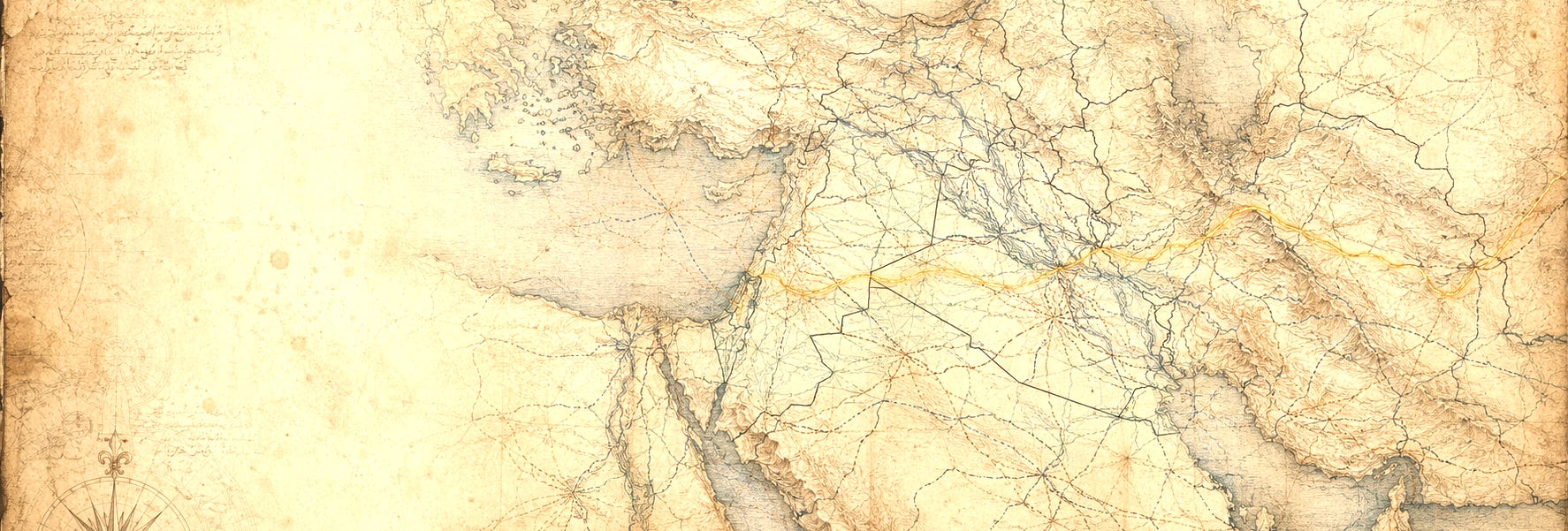
There is no single Middle East
The Middle East is a geographic label, not a coherent unit. It includes Arab and non-Arab states, monarchies and republics, democracies and authoritarian systems, oil wealth and deep scarcity, strong institutions and hollow ones. Any sentence that begins “the Middle East wants” is already wrong.
The map is recent; the societies are older
One idea recurs in every post. The political map is not the social map. Many present borders were formalized late, during the fall of the Ottoman Empire, the European mandates, and the wars and state-building that followed. The states are real now. But the things that cross them are often older. Kurdish and Druze communities. Palestinian families and refugees. Sunni and Shia networks. Tribal and trading routes. The water basins and power lines that ignore politics entirely.
Religious, ethnic, and cultural communities often predate the region’s modern borders. These older ties do not determine anyone’s political position, but they connect people across states, allowing a conflict in one place to mobilize communities and governments throughout the region.
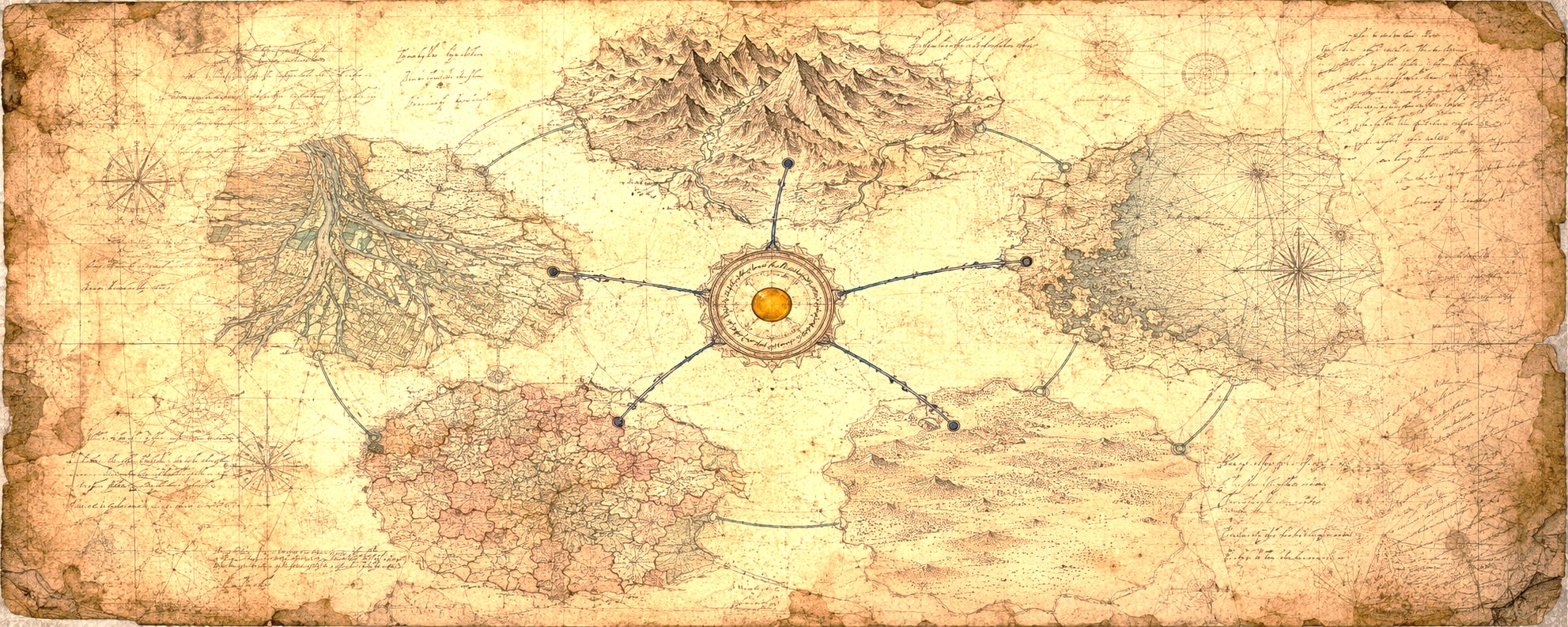
Five systems that interact
Each of the five following posts will focus on one these systems.
Iran, the United States, and Israel: nuclear risk, deterrence, sanctions, armed partners, and signals that are constantly misread.
Israel and Palestine: national claims, security, occupation, rights, refugees, and memory.
Fragile states and armed groups: who supplies authority, protection, and a paycheck when the state cannot.
Water, heat, food, and electricity: the material system that decides who gets scarce resources.
And the absence of a regional order: a region full of alliances but without shared rules for managing rivalry.
The mechanisms that keep turning
Taken together, the five issues reveal a recurring pattern: One side takes military action to protect itself. The other sees that action as a threat and responds by arming. Agreements fail because they lack public support. Power is divided among governments, militias, and foreign backers, so no single actor can enforce a settlement. Local groups seek foreign help, turning local conflicts into wider proxy wars. Each action produces a reaction, which is then used to justify another action. Military decisions can be made in days; building trusted institutions takes decades.
The region does not lack plans. The problem is that solving one issue often makes another worse. Military pressure deepen hostility. Subsidies weaken public finances. Foreign protection divide a state. Normalization may expand trade without resolving the underlying conflict. These outcomes result from choices, not chance.
The honest objection
The strongest objection to all of this is fair, and I want to meet it head on: Calling the region “a system” can sound like a way to dissolve responsibility, as if no one chose anything and everyone is equally to blame. That is not the claim. Actors differ in power, in legal standing, and in what they have actually done. A systems view is meant to explain how pressure travels, not to erase accountability. This series will state these differences clearly and distinguish documented facts from accepted assessments, disputed accounts, and unsupported claims.
What this series will not do
It will not offer a full history of the region. It will not treat every actor as equally powerful or every action as equivalent. No single diplomatic formula can resolve every conflict. Opposing war does not mean ignoring threats or armed groups.
Over to you
When the next headline comes from the region, try this approach, as I do: Ask not only who acted, but what their action will push the next actor to do. That second question is where the system lives, and it is the one the daily coverage almost always skips. Next in the series: Iran and America, the conflict that does not stay bilateral, and why nearly every actor in it insists it is only playing defense. Subscribe to be notified and receive posts via email:
Further reading
One anchor from each part of the series library, rather than all thirty sources.
Congressional Research Service, U.S. Conflict with Iran. Overview and chronology of the Iran confrontation.
Congressional Research Service, The Palestinians: Overview, Aid, and U.S. Policy Issues. A baseline on the Israeli-Palestinian file.
Congressional Research Service, Syria: Transition and U.S. Policy. The post-Assad transition and its armed actors.
World Bank, The Economics of Water Scarcity in the Middle East and North Africa. The regional resource squeeze and the institutions behind it.
Chatham House, Steps to Enable a Middle East Regional Security Process. One route toward the order the region lacks.
A view from inside the region: the Doha Institute (ACRPS) analyses in the series library, which read these events from the Arab world rather than from Washington or London.
***
Excellent typology for tracking the issues and their interactions. It emphasizes that no one solution or slogan will work without considering its ramifications.