
AI: Thinking in Tandem
How the back-and-forth with a machine changes the way you think.

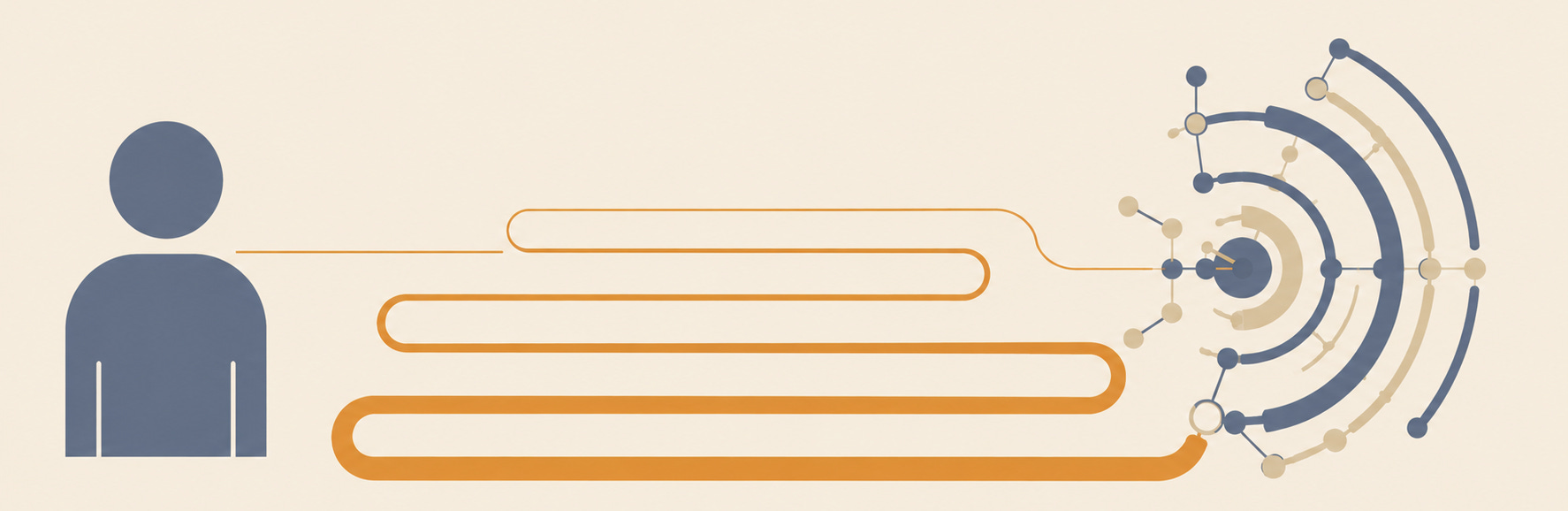
You start typing a question you cannot quite phrase. Halfway through the sentence you notice what you actually meant, and fix it. That happens to me all the time. What comes back is not just an answer. It is your own half-formed idea handed back to you with edges, ready to push on again.
The valuable thing about AI is not the answer at the end. It is the back-and-forth that gets you there. Done well, the exchange widens your view and makes you think faster. Done badly, it just agrees with you faster.
Post 7 of a series on AI: concepts, systems, and how we think with the new tool.
A counterpart that keeps pace
I have had exchanges with AI that I could not have had anywhere else. Not because the people around me lack intelligence. Because almost no one has the time, the context, and the appetite to follow a particular thread the moment I want to pull it.
The model does. It meets the idea where it actually sits, holds everything I have already said (for a while), and keeps pace while I work out where the thought is going. And yes, I come out the other side further along than I went in. That is new, and it is available to anyone. Sustained, on-demand, level-matched exchange is something ordinary life rations. The tool hands it to you on tap.
Post 3 made the case that AI widens your lens, surfacing what you would not have thought to ask. The dialogue does that and one thing more: It accelerates. You lay out a line of inquiry, test where it bends, and find the next question faster than you could alone. Width and speed, from the same back-and-forth. The skill that unlocks it is how you ask. A vague prompt gets a vague partner. Give it the real question, the context, the constraint you actually care about, and the exchange sharpens. You are not querying a database. You are steering a conversation.
From maker to director
Watch what changes when the work gets bigger than a single question. In Claude’s Cowork, the model drafts and you direct. Your effort moves from producing the thing to judging it. Is this right, is this what I meant, what is missing. The hard part is no longer the blank page. It is telling a good answer from a merely plausible one.
Coding shows the same shift, only sharper. A developer used to write every line. Now they describe what they want and read what comes back. The thinking moves up a level, from how to build it to what to build and why.
In both, your mind spends less time on execution and more on intent and judgment. That is a real gain and a real demand. The faculties you exercise are not the old ones. They are the harder ones: critical thinking and systems thinking.
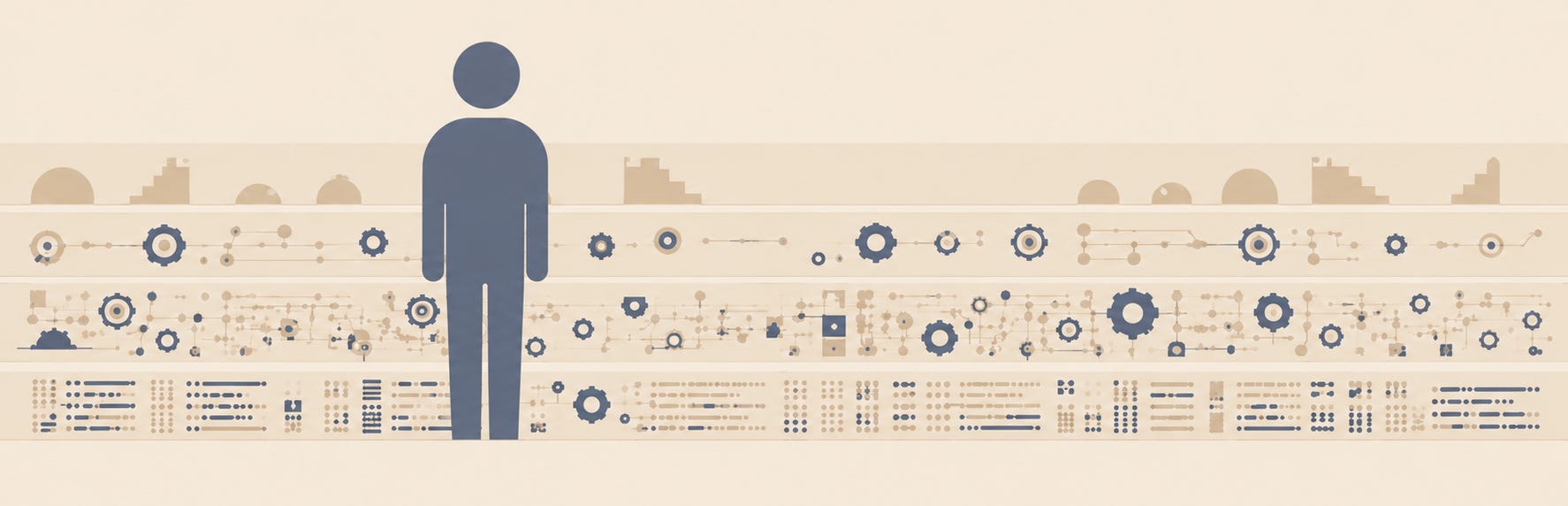
The long view
We have a preview of where this goes, and it is not in a tech demo. It is on a chessboard. For 25 years the best players in the world have trained with engines stronger than any human. The result is not that they stopped thinking. They think differently. A generation raised on engines plays moves no human school would have taught, having absorbed ideas from a partner that sees further. The game got deeper, not shallower.
The same partnership cuts the other way the moment you stop engaging. Hand the analysis to the engine and copy the answer, and you learn nothing. What is coming will press harder on this. AI may interrupt with a suggestion, reasons aloud while you walk, remembers every conversation you have had with it. Each could stretch your thinking or quietly do it for you. The difference is whether you stay the one driving.

The honest counterpoint
The gift and the trap are the same feature. A 2025 study from Microsoft and Carnegie Mellon found that the more confidence people placed in an AI’s output, the less critical thinking they brought to it. Convenience and engagement pull in opposite directions.
The deeper risk is quieter. A counterpart that always meets you at your level and never tires can also flatter you, agree too easily, and smooth away the friction that disagreement provides. The model is steerable by design. That is exactly why it is efficient, and exactly why it can become an echo of your own framing. Speed and reach do not help if the partner only takes you where you were already going.
Questions for the reader
Think of a recent exchange with AI that genuinely moved your thinking forward. What did you bring to it that made it work? And the next time the model agrees with you completely, ask the harder question. Did it test the idea, or just reflect it back?
A note on timing. AI is changing fast enough that some of what is described here will read differently in six or twelve months. That is the nature of the subject, not a flaw in the snapshot.
Further reading
Lee and colleagues, “The Impact of Generative AI on Critical Thinking” (Microsoft Research and Carnegie Mellon, 2025): the dissenting evidence, that confidence in the tool can dull the very faculty it claims to aid.
Kosmyna and colleagues, “Your Brain on ChatGPT” (MIT Media Lab, 2025): an EEG study of essay-writing in which the ChatGPT group showed the lowest brain engagement. Not peer-reviewed, small sample, and formally critiqued; the authors themselves pushed back on the “AI makes you dumb” headlines. Read it alongside its critics.
On using it or losing it: Maguire and colleagues on London taxi drivers, the classic evidence that navigation builds the hippocampus, paired with Dahmani and Bohbot on how habitual GPS use is linked to letting it erode.
Garry Kasparov, Deep Thinking (2017): a grandmaster’s case that machines can raise human play rather than end it. See Demis Hassabis’s review for the short version of the argument.
***